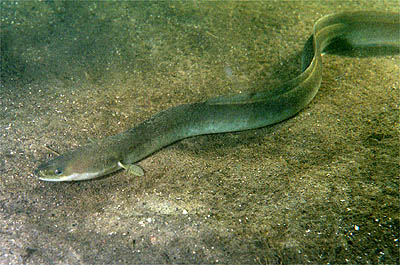
The European eel (Anguilla anguilla) embarks on one of nature's most extraordinary and enigmatic migrations, a journey that spans thousands of kilometers from the rivers and lakes of Europe to a mysterious, remote patch of the Atlantic Ocean: the Sargasso Sea. For centuries, the precise details of their reproduction remained shrouded in mystery, leading to fascinating myths and intense scientific investigation. While we've made significant strides in understanding this incredible life cycle, the fundamental question, Wie Werden Aale Geboren (How Eels Are Born), continues to inspire awe and ongoing research into one of the animal kingdom's most captivating phenomena.
The Enigmatic Sargasso Sea: Cradle of European Eels
Nestled east of the Florida coast, within the vast expanse of the Atlantic Ocean, lies the legendary Sargasso Sea. This unique body of water, defined not by land boundaries but by oceanic currents and its distinctive floating sargassum seaweed, serves as the sole known spawning ground for all European eels. It is here, far from the freshwater habitats they call home for most of their lives, that the European eel completes its life cycle, initiating the next generation.
The journey itself is monumental. Eels from European waters undertake a staggering migration of over 6,000 kilometers, driven by an instinct to reproduce. Upon reaching the Sargasso Sea, the adults, having accumulated a thick layer of fat as an energy reserve for their epic voyage, prepare for their final act of procreation. While the exact depths of their spawning remain somewhat elusive, scientific hypotheses suggest that the process likely occurs within the upper 200 meters of the ocean, collectively and simultaneously.
A Synchronized Spawning Event
The reproductive season for European eels in the Sargasso Sea is a prolonged affair, typically commencing in December, reaching its zenith in February and March, and extending into May. This synchronized, collective spawning event is a critical aspect of their reproductive strategy, maximizing the chances of successful fertilization and larval survival in the vastness of the open ocean. Once the eels have fulfilled their reproductive duty, the adult fish perish, their life's purpose complete, leaving their offspring to begin the long journey back to ancestral feeding grounds.
The Unfolding of Maturity: A Hormonal Riddle
One of the most intriguing aspects of the European eel's life cycle is its inability to reach sexual maturity in its freshwater habitats. Eels residing in European rivers and lakes, despite growing for 10 to 15 years, maintain undeveloped ovaries and testes. The biological mechanisms that prevent maturation in these environments are complex, centered around a hormonal blockade that suppresses the release of pituitary hormones essential for gonad development.
How eels naturally overcome this blockade upon reaching the Sargasso Sea remains one of the great biological mysteries. Scientists hypothesize that the unique environmental cues of the Sargasso Sea—perhaps specific temperature, salinity, pressure, or even chemical signals—trigger the necessary hormonal changes. In controlled environments, such as aquaculture facilities, this hormonal barrier can only be overcome through external intervention, specifically by injecting pituitary hormones to induce sexual maturation. This highlights the profound environmental specificity required for the eels' natural reproductive process.
The challenges in artificially inducing eel reproduction in captivity are significant, underscoring the delicate balance of hormones and environmental factors. To delve deeper into these scientific endeavors and the progress made, you can explore the article Breeding European Eels: Hormonal Challenges and Lab Success.
Wie Werden Aale Geboren: From Microscopic Egg to Hatchling
Thanks to recent advancements in experimental research, our understanding of wie werden Aale geboren has grown significantly, particularly concerning their early life stages. Scientists have achieved a remarkable breakthrough by successfully cultivating viable European eel eggs and larvae under controlled laboratory conditions. This success provides an unprecedented opportunity to study the embryonic and larval development of this elusive species.
These laboratory studies have revealed fascinating details about the inception of eel life. European eel eggs obtained in these controlled conditions measure approximately 1.6 ± 0.08 mm in diameter – tiny, yet packed with the blueprint for an incredible journey. The embryonic development, from fertilization to the hatching of the larva, is remarkably swift, taking roughly 46-48 hours at a temperature of 20°C. Upon hatching, the larvae emerge in a relatively undeveloped state, characterized by a prominent yolk sac. This yolk sac serves as the primary source of nutrition for the newly hatched larvae during their critical first 7-14 days of life.
The Delicate Start: Yolk Sac and First Feeds
The transition from relying on the yolk sac to independent feeding is a crucial and often challenging phase for the larval eels. Approximately 12 days post-hatching at 20°C, the larvae develop the ability to feed actively. Remarkably, they demonstrate a resilience that allows them to survive an additional 10 days without food if necessary. Post-hatching, the larvae exhibit a consistent growth rate, increasing in length by up to 0.25 mm per day, gradually transitioning towards the elongated, snake-like form characteristic of juvenile eels.
By 12 to 13 days after hatching, the larval eels' dentition is fully developed. However, studies on their functional morphology indicate that their biting force is still relatively weak at this size, rendering them unable to ingest objects larger than 0.1 mm. This observation supports the hypothesis that young eel larvae primarily consume flocculent or gelatinous food sources. Scientists believe their diet consists largely of "marine snow"—tiny organic particles derived from dead plankton, smaller organisms, and their excretions, which drift slowly through the water column.
Despite these breakthroughs, the successful rearing of European eel larvae remains a significant hurdle. Identifying optimal biophysical conditions such as temperature, salinity, stocking density, and turbulence during these early life stages is crucial. The period from the yolk-sac stage to the initiation of first feeding is particularly fraught with difficulties, representing a bottleneck in aquaculture efforts. For a deeper dive into the complexities of larval development and feeding, the article Journey of the Eel Larvae: From Yolk Sac to First Feeding provides more insight.
The Perilous Return: From Leptocephalus to Glass Eel
Once hatched in the Sargasso Sea, the translucent, leaf-shaped larvae, known as leptocephali, begin their own epic migration back to the continental shelves of Europe. This journey, which can take up to three years, is facilitated by the powerful currents of the Gulf Stream. As they drift across the Atlantic, the leptocephali grow, typically reaching about 5-10 centimeters in length, before undergoing a remarkable metamorphosis.
Nearing the European coasts, the leptocephali transform into the familiar "glass eel" stage—a transparent, slender version of the adult eel, reflecting their readiness to enter freshwater. It is at this stage that their life in European rivers and lakes begins. After years of growth and maturation in freshwater, accumulating significant fat reserves, these silver eels, now sexually mature, are ready to undertake the reverse journey, returning to the Sargasso Sea to complete the cycle and ensure the continuation of their species. This final migration is a testament to the powerful, inherent drive that defines the life of the European eel.
The life cycle of the European eel is a marvel of nature, a testament to endurance, instinct, and adaptation. From the mysterious depths of the Sargasso Sea, where the critical question of Wie Werden Aale Geboren finds its answer in a delicate, synchronized spawning event, to the arduous migrations across oceans and continents, every stage is fraught with challenge and wonder. While significant progress has been made in unraveling the secrets of their reproduction, particularly through groundbreaking laboratory research, many mysteries endure. Continued scientific investigation is vital to fully comprehend and protect this extraordinary species, ensuring that the European eel can continue its incredible journey for generations to come.