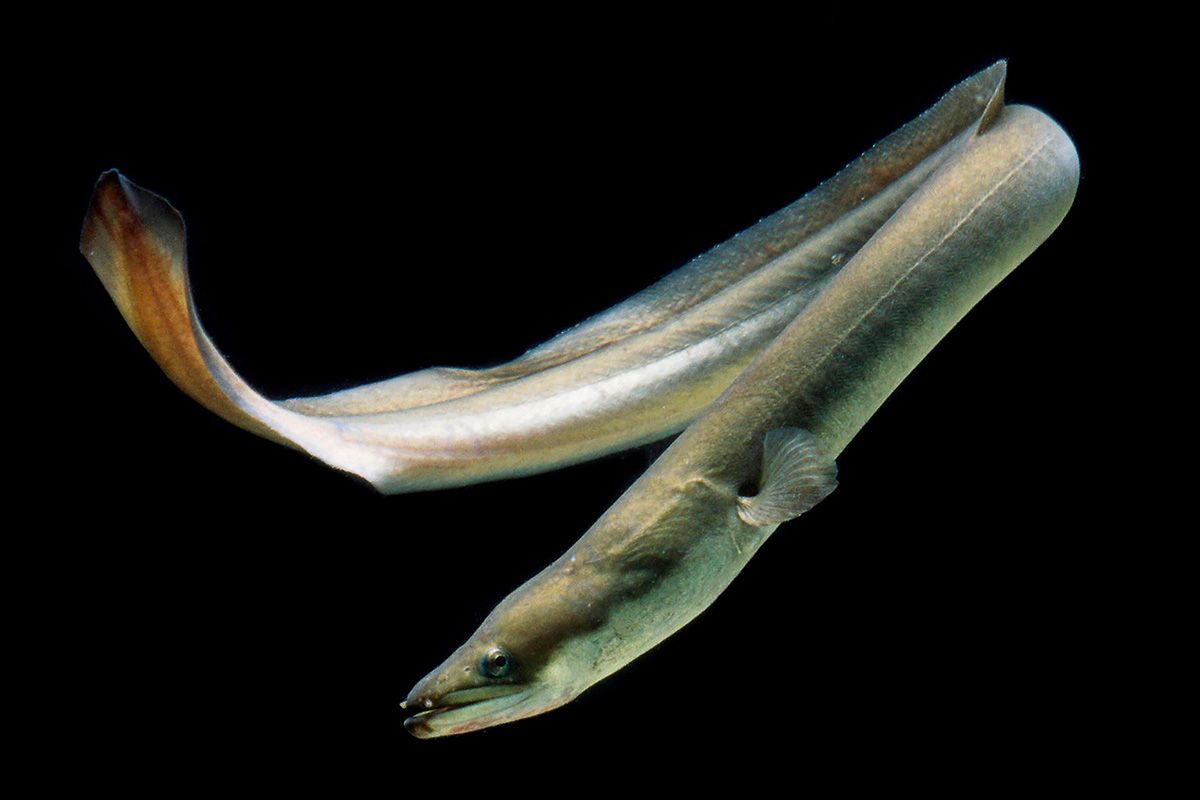
Breeding European Eels: Unraveling Hormonal Mysteries and Pioneering Lab Success
The European eel (Anguilla anguilla) represents one of nature's most enigmatic creatures. Its life cycle, a monumental journey spanning thousands of kilometers, culminates in a mysterious spawning event in the depths of the Atlantic Ocean. For centuries, the question of Wie Werden Aale Geboren – how are eels born – remained a profound biological puzzle. While the natural process is largely hidden from human observation, dedicated scientific research has begun to lift the veil, not only by charting their incredible migration but also by achieving remarkable breakthroughs in controlled breeding environments. These advancements are crucial for understanding the species and addressing its critically endangered status.
The Elusive Journey to Spawning: Where Eels are Born
The natural birthplace of all European eels lies in the vast, warm waters of the Sargasso Sea, a unique region of the North Atlantic east of Florida. This is the only place on Earth where these fascinating fish reproduce. After living for 10 to 15 years in the freshwater rivers and lakes of Europe, the eels transform. Their bodies darken, their eyes enlarge, and they develop a thick layer of fat – a vital energy reserve for the arduous journey ahead. They then embark on an epic, often 6,000-kilometer migration across the Atlantic, heading precisely for the Sargasso Sea.
Upon reaching their spawning grounds, typically beginning in December, peaking in February/March, and lasting until May, the eels participate in a collective and simultaneous spawning event. Scientists hypothesize that this takes place in the upper 200 meters of the ocean. Crucially, eels migrating from European waters are not yet sexually mature; their ovaries and testes remain undeveloped. Once they have successfully reproduced, their life cycle concludes, and the adult eels die. This profound act of sacrifice paves the way for the next generation.
Following fertilization, tiny eel larvae, known as leptocephali, hatch. These leaf-shaped, transparent creatures, initially around 10 centimeters long, begin their own incredible journey. Carried by the powerful Gulf Stream, they drift back across the Atlantic towards the coasts of Europe, slowly transforming into the glass eel stage before entering freshwater systems to grow and mature. Understanding this natural odyssey is key to appreciating the monumental task scientists face in replicating it. For a deeper dive into this incredible migration, read about the Sargasso Sea Secret: Where European Eels Begin Their Lives.
Unlocking Maturity: The Hormonal Hurdle
One of the most significant mysteries surrounding the European eel's life cycle is its inability to achieve sexual maturity in European waters. While their bodies prepare for migration, the internal hormonal processes necessary for full gonadal development are blocked. The exact triggers and mechanisms that naturally initiate hormone secretion in the Sargasso Sea remain largely unknown, posing a major challenge for scientists and aquaculture specialists aiming to breed eels in captivity.
To overcome this inherent hormonal blockade in controlled environments, researchers have found a critical intervention: the injection of pituitary hormones. These are the same hormones that naturally regulate sexual maturation in many vertebrates. By administering these vital compounds, scientists can artificially induce the development of ovaries and testes in European eels, thereby initiating the reproductive cycle outside of their natural oceanic spawning grounds. This breakthrough has been foundational for any successful captive breeding program, offering a direct pathway to understanding the intricate biological processes involved in answering the question of Wie Werden Aale Geboren under controlled conditions.
The ability to manipulate these hormonal pathways is not merely an academic achievement; it's a vital tool for conservation. With European eel populations critically endangered due to habitat loss, pollution, and overfishing, controlled breeding offers a potential avenue for restocking and supporting wild populations. It also opens doors for sustainable aquaculture, reducing reliance on wild-caught glass eels.
Lab Breakthroughs: From Egg to Larva in Captivity
Recent experimental research has marked a monumental leap forward in our understanding of eel reproduction, achieving something once thought impossible: the successful breeding of viable European eel eggs and larvae in controlled environments. This unprecedented success has laid the groundwork for in-depth studies into the early life stages of this elusive species in captivity, moving us closer to fully understanding Wie Werden Aale Geboren.
Under meticulously controlled culture conditions, researchers have been able to obtain European eel eggs with a consistent diameter of approximately 1.6 ± 0.08 mm. Following fertilization, the embryonic development from egg to hatching takes a remarkably precise duration of about 46-48 hours when maintained at a temperature of 20°C. The newly hatched larvae emerge in a relatively undeveloped state, characterized by a prominent yolk sac. This yolk sac serves as the primary nutritional source for the young larvae during their critical first 7-14 days of life, providing essential energy while their digestive systems develop.
Around 12 days after hatching, again at 20°C, the larvae show signs of being capable of external feeding. Interestingly, they can survive for an additional 10 days without consuming external food, thanks to residual yolk reserves or incredibly efficient metabolism. Post-hatching, the larvae exhibit a steady growth rate, increasing in length by up to 0.25 mm per day, gradually transitioning towards the typical elongated, snake-like form we associate with adult eels. Their jaws are fully developed by 12 to 13 days post-hatch. However, functional morphology studies reveal that their biting force at this stage is still relatively weak, rendering them unable to swallow objects larger than 0.1 mm. This observation supports the hypothesis that young eel larvae consume extremely fine, flocculent, or gelatinous food sources such as "marine snow" – tiny organic particles derived from dead plankton, smaller organisms, and their excretions, abundant in the open ocean. To learn more about this crucial period, explore the Journey of the Eel Larvae: From Yolk Sac to First Feeding.
The Road Ahead: Challenges in Larval Rearing
Despite the remarkable strides in inducing spawning and obtaining viable eggs and larvae, several significant hurdles remain before full-cycle aquaculture of the European eel becomes a commercial reality. The primary challenge lies in the successful rearing of larvae beyond the initial yolk-sac stage through to their first exogenous feeding and subsequent development. This phase is notoriously difficult and complex, demanding a level of environmental precision that is hard to replicate outside the vastness of the Sargasso Sea.
One of the most critical obstacles is the identification and optimization of precise biophysical conditions. This includes meticulously controlling factors such as water temperature, salinity, stocking density, and even water turbulence during these early, vulnerable life stages. Each of these parameters must be finely tuned to mimic the natural environment the larvae would encounter during their oceanic drift. Slight deviations can lead to high mortality rates, making the quest for optimal conditions a painstaking process of trial and error.
Furthermore, the precise nutritional requirements of these minute larvae are still not fully understood. While the "marine snow" hypothesis offers a clue, replicating this complex, ever-present, and nutrient-rich food source in a tank is incredibly challenging. Developing an artificial diet that is both palatable and nutritionally complete for the delicate larvae – especially during the transition from yolk-sac absorption to active feeding – is paramount. Scientists are exploring various micro-algae, zooplankton, and engineered feeds, but finding the perfect solution that supports sustained growth and development remains a major focus of ongoing research. Overcoming these rearing difficulties is essential for truly establishing how Wie Werden Aale Geboren can be supported in a sustainable aquaculture setting, ensuring the survival of this iconic species.
Conclusion
The journey to understand Wie Werden Aale Geboren is a testament to both nature's enduring mysteries and humanity's scientific ingenuity. From the monumental migrations to the Sargasso Sea to the intricate hormonal blockades preventing maturation in European waters, the life cycle of the European eel is truly extraordinary. While scientists have made incredible progress in overcoming these challenges through hormonal induction and successfully breeding eggs and larvae in controlled laboratory settings, the path to sustainable, full-cycle aquaculture is still fraught with obstacles, particularly concerning larval rearing and nutrition. Continued research into optimizing biophysical conditions and developing appropriate feed will be crucial for securing the future of this critically endangered species, offering hope for conservation and potentially revolutionizing aquaculture practices.