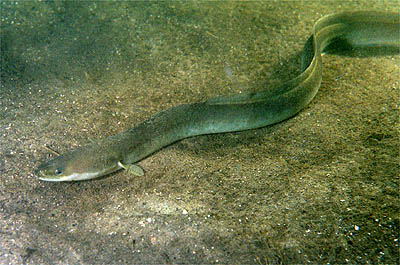
Journey of the Eel Larvae: From Yolk Sac to First Feeding
The life cycle of the European eel (Anguilla anguilla) is one of nature's most profound and enduring mysteries. For centuries, the question of where and Wie Werden Aale Geboren (How are eels born?) remained unanswered, a source of myth and scientific intrigue. Today, thanks to remarkable scientific breakthroughs, we are beginning to unravel the secrets of their birth and earliest life stages, revealing a journey that is as fragile as it is epic.
From the moment of conception in the vast, open waters of the Sargasso Sea to their first independent meal, eel larvae face monumental challenges. Their survival hinges on a precise sequence of biological developments and a reliance on the ocean's subtle currents. Understanding this initial phase, from a tiny yolk-sac-dependent hatchling to a self-feeding larva, is crucial not only for satisfying our curiosity but also for informing vital conservation efforts for this critically endangered species.
The Sargasso Sea: Cradle of Eel Life and a Hormonal Mystery
The journey of the adult European eel to its spawning grounds is an unparalleled feat of endurance. After maturing for 10-15 years in the freshwater rivers and lakes of Europe, these "silver eels" transform, developing thick fat layers to fuel a staggering 6,000-kilometer migration across the Atlantic Ocean to the Sargasso Sea. This remote region, east of Florida's coast, is the only known place on Earth where all European eels are born.
Upon arrival, the eels, whose reproductive organs were undeveloped during their freshwater lives, undergo a final maturation. In their native European waters, a hormonal blockade prevents sexual maturity. Scientists have found that only through the injection of pituitary hormones – the very hormones that regulate natural sexual maturation – can this blockade be overcome in controlled environments. This highlights the unique biological switch that is flipped solely within the Sargasso's enigmatic embrace.
The spawning event itself is believed to be a collective and simultaneous affair, occurring from December to May, peaking in February and March, within the upper 200 meters of the ocean. After this colossal reproductive effort, the adult eels, having fulfilled their biological imperative, die. This marks the definitive answer to Wie Werden Aale Geboren: they are born in the deep, warm waters of the Sargasso Sea, a testament to a life cycle driven by an unfathomable instinct.
From Fertilization to Fragile Hatchling: A Laboratory Breakthrough
Observing eel spawning and larval development in the wild is virtually impossible due to the vastness and depth of the Sargasso Sea. This is where scientific innovation steps in. Recent breakthroughs in controlled aquaculture environments have been pivotal in demystifying the earliest stages of eel life. For the first time, researchers have successfully produced viable eggs and larvae of the European eel in captivity, providing an invaluable window into their delicate beginnings.
Under meticulously controlled conditions, European eel eggs measuring approximately 1.6 ± 0.08 mm in diameter were obtained. The embryonic development, from fertilization to hatching, proved to be remarkably rapid, taking just 46-48 hours at a constant temperature of 20°C. However, the newly hatched larvae emerge in a relatively undeveloped state, characterized by a prominent yolk sac. This yolk sac is not merely an appendage; it's a vital lifeline, serving as the sole source of nutrition for the fragile larvae during their critical first 7-14 days of life. This phase, where the larvae are entirely dependent on internal reserves, is exceptionally vulnerable, demanding precise environmental conditions for survival.
The ability to culture these early stages, though still in its nascent phases, is a monumental leap. It allows scientists to study the intricate biological processes at play, from genetic expression to physiological responses, paving the way for a deeper understanding of breeding European eels and overcoming the challenges associated with their reproductive cycle.
The First Meal: Decoding the Larval Diet and Development
The transition from yolk sac dependency to independent feeding is a monumental hurdle for any developing organism, and for eel larvae, it's a phase fraught with unique challenges. Approximately 12 days after hatching, under controlled temperatures of 20°C, the larvae appear to become capable of feeding. Remarkably, they can endure another 10 days without consuming external food, showcasing a surprising degree of resilience early in life. During this period, the larvae exhibit steady length growth, increasing by up to 0.25 mm per day, gradually elongating into the serpentine form that defines their species.
Intriguingly, by 12 to 13 days post-hatch, the larvae's dentition is already fully developed. However, studies on the functional morphology of European eel larvae reveal that their biting force at this size is still relatively weak. They are unable to swallow objects larger than 0.1 mm, which provides crucial clues about their natural diet. This anatomical limitation strongly supports the hypothesis that eel larvae feed on "sea snow."
What exactly is sea snow? It's a fascinating and essential component of the ocean's ecosystem, consisting of a continuous shower of tiny organic particles from the upper water column. This includes dead or decaying plankton, smaller organisms, and their excretions, often held together by mucus. Its flocculent, gelatinous nature makes it an ideal food source for larvae with weak biting capabilities, providing the necessary nutrients without requiring significant mastication. The presence of this rich, particulate organic matter in the Sargasso Sea would thus be critical for the survival and initial growth of the newly hatched eel larvae as they embark on their epic journey.
Overcoming Obstacles: The Future of Eel Aquaculture and Conservation
While significant strides have been made in understanding how eels are born and their initial developmental stages, the successful rearing of European eel larvae from the yolk-sac stage through to their first feeding remains a formidable scientific challenge. Several critical obstacles must still be overcome, primarily revolving around identifying the optimal biophysical conditions for their survival and growth during these early life stages.
Key parameters like temperature, salinity, stocking density, and water turbulence all play a crucial role. Replicating the precise, complex interplay of these factors found in the natural environment of the Sargasso Sea is incredibly difficult. For instance, too much turbulence could physically damage the delicate larvae, while too little might not provide adequate oxygenation or keep food particles suspended. Furthermore, perfecting a nutritional diet that precisely mimics sea snow's complex composition is an ongoing area of research.
The successful resolution of these challenges is not merely an academic pursuit. It holds immense promise for the conservation of the European eel, which faces numerous threats in its natural habitat, including habitat loss, barriers to migration, and overfishing. Developing sustainable aquaculture techniques for eels could reduce pressure on wild populations, offering a lifeline for a species whose survival depends on one of the most remarkable and mysterious journeys in the animal kingdom. Understanding every intricate detail of Wie Werden Aale Geboren is the first, essential step toward ensuring their future.
Conclusion
The journey of the eel larvae, from a microscopic egg in the vastness of the Sargasso Sea to a fragile, yolk-sac-dependent hatchling, and then to a self-feeding larva, is a testament to nature's incredible complexity. The question of Wie Werden Aale Geboren has evolved from a profound mystery to an unfolding scientific narrative, revealing the precise conditions and remarkable adaptations required for survival. Every discovery, from the rapid embryonic development to the reliance on "sea snow," underscores the vulnerability of these early stages and the sheer scale of the challenges faced by the species.
As scientists continue to unravel the secrets of their birth and early life, the hope is to unlock the keys to sustainable aquaculture and effective conservation strategies. The ultimate goal is to safeguard the future of the European eel, ensuring that their enigmatic journey, which begins with such humble origins, continues for generations to come.